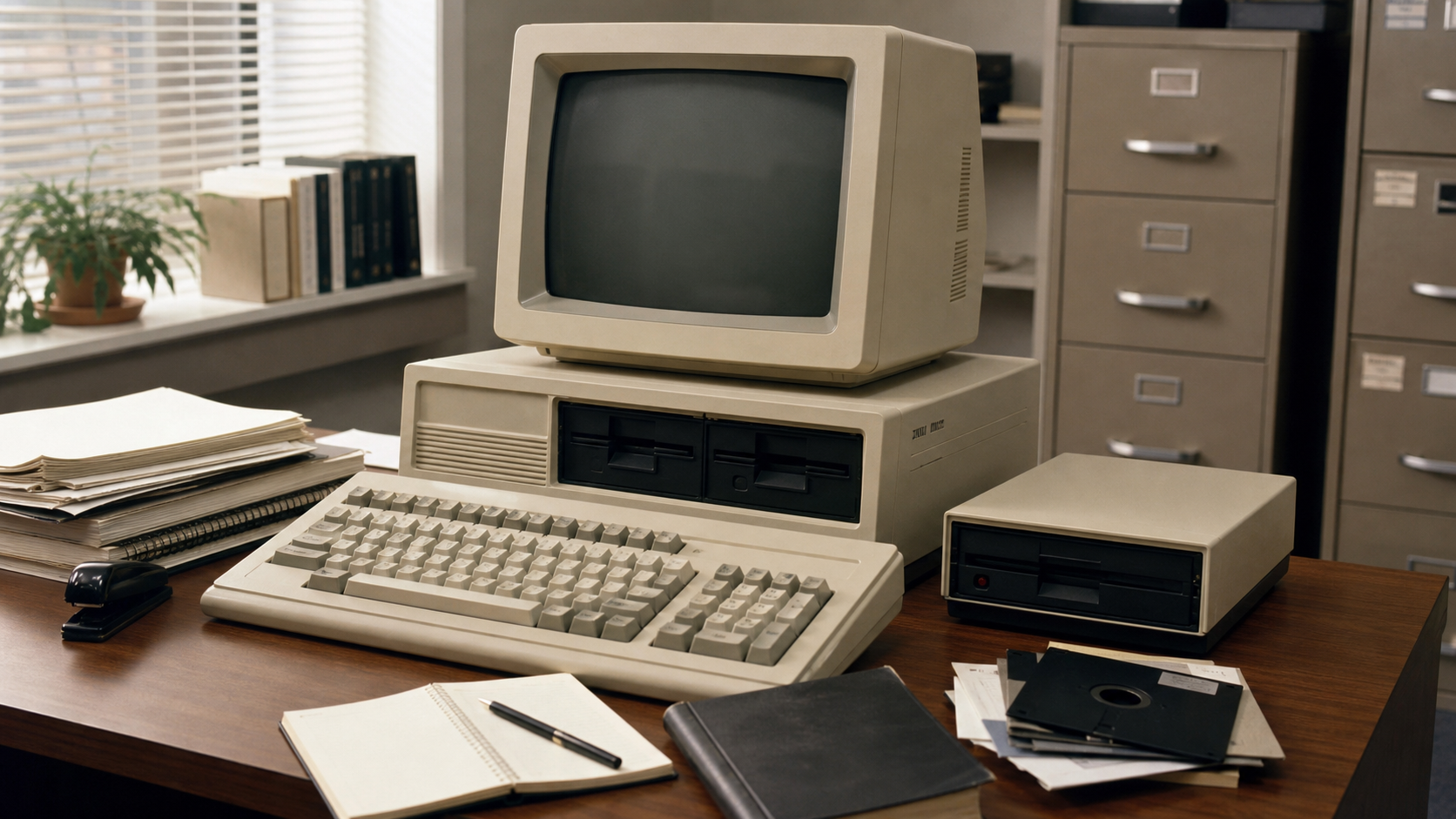
Not every good tech story has to be about what shipped this week. Sometimes the best way to understand current hardware trends is to revisit the machine that helped define the modern PC market in the first place: IBM’s 5150 Personal Computer, introduced on August 12, 1981.
The IBM PC was not the first personal computer, and that is part of what makes its success so instructive. Earlier systems existed, but IBM arrived with brand legitimacy, a strong distribution strategy, and a design approach that helped standardize how buyers, developers, and hardware makers thought about personal computing. The machine became influential not because it appeared first, but because it made the category feel durable and commercially serious.
One of the most important choices was openness. The IBM PC used widely available components and a documented architecture that made it easier for outside developers and hardware companies to participate. Software support expanded quickly, peripherals multiplied, and a larger ecosystem formed around compatibility. That ecosystem effect ended up being more powerful than the machine’s raw specifications.
The long shadow of that decision is still visible today. Modern PCs remain shaped by the same broad idea that standard platforms create momentum. Developers build where the installed base is stable. Component makers invest where interoperability is clear. Buyers gravitate toward systems that promise broad software support and upgrade flexibility. What looked like a product launch in 1981 became an industry template.
There is also a useful business lesson in the IBM PC story. Hardware markets are not always won by the most novel design. They are often won by products that align timing, software, availability, pricing, and trust well enough to unlock network effects. That lesson still applies in the AI hardware race, where ecosystem adoption may prove just as decisive as technical brilliance.
Looking back at the IBM PC is a good way to remember that computer history is not separate from the present. The current fights over AI infrastructure, developer ecosystems, and hardware standards are newer versions of an old pattern: the platforms that make it easiest for others to build on top of them tend to shape the future.
Why it matters: the IBM PC’s open-architecture model still helps explain why standards and ecosystems matter so much in hardware markets today.
Source: IBM History and Computer History Museum - The IBM PC and IBM Introduces Personal Computer